Aspiring Beekeepers
So you are interested in becoming a beekeeper. Good for you! You will no doubt be very excited to dive in and get started. But before you rush off to fill your garden shed with equipment and source some bees you should make sure you are properly informed and prepared, for your own sake, your neighbours' and for that of the bees!
One of our members was given the following advice when he started beekeeping:-
Lol Pinch (an experienced beekeeper), said the book I had bought would be great later, "Go to your local library and get a simple children's book on honey bees with no more than 30 pages. You will then understand what you are about to learn about and work with adding what you are about to learn knowing where it belongs and remembering it in the right place. It will be your 'all about bees' map."
Educate yourself
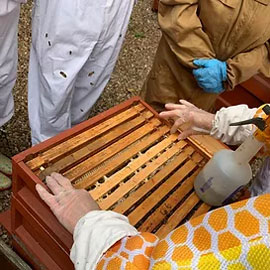
Being a successful beekeeper and keeping healthy and happy bees requires some basic understanding of bee biology, behaviour and beekeeping methods and equipment. Don't let this intimidate you, learning and networking with other beekeepers is one of the most fun parts of the hobby, and allows you to appreciate your bees all the more once you get them. Joining your local Beekeeping Association will allow you to experience beekeeping first hand equipping you with the basic skills and knowledge for when you get your first colony.
Meetings
RBKA hold meetings on the 3rd Wednesday of each month during winter. Anyone interested in finding out more about bees would be more than welcome to attend these, there is no obligation to join right away. The winter programme dates and topics for the current year are on the home page.
Beekeeping courses
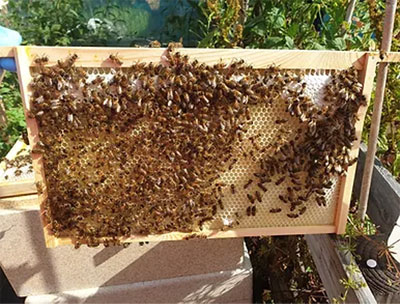 We run a beekeeping course for beginners each spring and we strongly advise all new beekeepers to attend a course before acquiring bees and spending money on equipment.
Reading
There are many, many beekeeping books you can buy, and not all books advocate the same practices. One thing to be aware of when buying books is when the book was published (is it recent enough to advise on the management of Varroa, which was first discovered in 1992 in the UK). And another is where the author is from, advice from a beekeeper in Cornwall which is generally more temperate than Yorkshire, may not be as appropriate to a northern beekeeper for example.
RBKA recommends any of the following books as a good first choice:
- Bees at the Bottom of the Garden by Alan Campion and Gay Hodgson.
- Teach Yourself Beekeeping by Adrian Waring.
- Guide to Bees and Honey by Ted Hooper.
Rotherham Library has a few older texts https://rotherham.ent.sirsidynix.net.uk/client/en_GB/default/?
Whilst Northern Bee Books has an extensive range of books about honeybees https://www.northernbeebooks.co.uk/
There are online resources that will support your learning and help you to ensure you are able to keep the bees in your care healthy and to prepare you for the challenges you will face taking care of honeybee colonies.

Okay, I've done my homework. Now what?
So you have read about swarms, stings, foulbrood, Varroa and drone layers. You feel prepared and are still keen to get started. Good stuff!
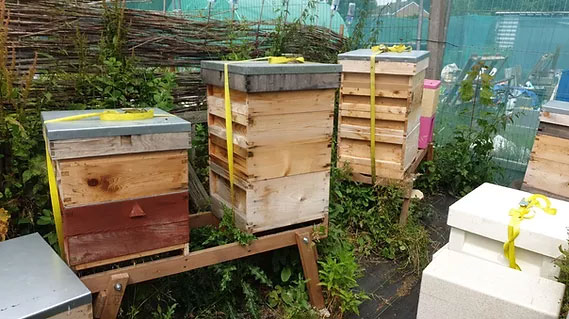
You will need to buy some equipment before you get your bees. There are many different types of hives available and it is useful to have guidance before making purchases. The vast majority of hives in the UK are of the British Standard (BS) National type. These are the hives deemed most appropriate for use in the UK climate and we would recommend them as the best choice for new beekeepers in the UK. There is a page 'Choosing a beehive' with an overview of some of the most common beehive types available in the dropdown menu under 'New Beekeepers' on the home page.
Acquisition of Bees
If you decide to keep bees, then you won't normally be able to get them until May/June. Over wintered nucs are not the best choice for a beginner.
In September the bees are starting to go into winter mode and will stay closed up till the next spring. This means that in the apiary there is not much going on, the bees will live through the winter on the honey stores collected during the past year.
Buy in late spring and choose queens raised in the year bought. This will be a young healthy queen. The hive should build up well during its first year with no risk of swarming. Hive examinations will be easier with a small colony, to begin with. Local bees - adapted to local conditions - are best. RBKA can help you in sourcing healthy bees from trusted sources.
Buying from a commercial supplier (e.g. Thornes or other commercial breeders recommended by the association) is not the cheapest option, they will be certified disease-free and good quality bees which will be suitable for beginners but they may not be so well adapted to local conditions.
Buying at auction; these will have been checked by a bee inspector prior to sale - but not the easiest option for a beginner.
Buying from local beekeepers; In this case, it is most important to have them checked by the local Bee Inspector or an independent Beekeeper experienced in disease detection.
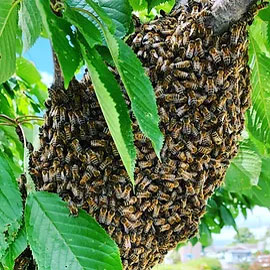
Acquiring a honeybee swarm may seem like a good idea since they are free but there is a risk the bees have pests or diseases that may not be apparent until after a few brood cycles by which time your equipment will be contaminated. The swarm will also likely have an older queen and there is a chance the swarm came from a colony with 'swarmy' genetics.
Honeybees can become infected with notifiable diseases of the brood - European Foul Brood (EFB) and American Foul Brood (AFB) cause colony collapse and treatment often requires destruction of the colony. The National Bee Unit has lots of information about diseases and pests that affect the honeybee which you should make yourself aware of www.nationalbeeunit.com
If you have any suspicions or concerns about your bees the bee inspector will be happy to inspect hives. It is their job to ensure diseases are not spread.
Once you have your bees
Congratulations! Now you should continue to be a paid-up member of a local association to maintain your third party and public liability insurance as well as giving you access to continued learning via modules and practical assessments provided by the British Beekeepers Association. You should also register your honeybee colony on Beebase to ensure you are kept up to date for any disease outbreaks https://www.nationalbeeunit.com/register